
New articles on The Monroe Gazette are on hiatus until BJ finishes his book, “How to Protect Yourself From Fascists & Weirdos.” It will be released in late May or early June of this year. If you would like a free .pdf or .mp3 copy of the book when they become available, subscribe to the Stupid Sexy Privacy newsletter here.
Articles will resume on The Monroe Gazette in early May. Until then we’ll be running brand new episodes of the podcast.
The Monroe Gazette is brought to you commercial free; and with no pay-wall to access over two years of our coverage of issues in Southern Orange County and beyond. If you would like to help keep the lights on, we’re looking to recruit 500 new, paid annual subscribers between now and December 31st. All you have to do is hit the button below. Paid subscribers get access to occasional bonus content, podcast audio, our behind the scenes Facebook group, and the ability to comment on posts just like this one.
The following is the full transcript from this week’s podcast. The transcript has been lightly edited for brevity and clarity where neded.
BJ Mendelson, Editor of The Monroe Gazette: Rory, thank you so much for joining us on The Monroe Gazette. we’ve had a couple of representatives from the Electronic Frontier Foundation on our sister podcast, Stupid Sexy Privacy. But because this is The Monroe Gazette podcast, I was hoping you could take a moment just to introduce yourself and the Electronic Frontier Foundation.
Rory Mir, Director of Open Access and Tech Community Engagement at the Electronic Frontier Foundation: Yeah, I’m happy to and thank you so much for having me on. I’m Rory Mir. I’m the Director of Open Access and Tech Community Engagement at the Electronic Frontier Foundation. The EFF has been fighting for over 30 years now. I wasn’t there the whole time, but over 30 years defending our civil liberties online. Basically bringing digital rights into a digital world. So a nonprofit law firm constantly defending innovation, privacy, and I’m particularly interested in defending consumers from bad tech practices from tech companies.
BJ Mendelson: The reason why we’re having this discussion on the Monroe Gazette as opposed to Stupid Sexy Privacy is because right now there is a provision in the New York state budget that the Electronic Frontier Foundation caught concerning 3D printers. Could you walk us through that?
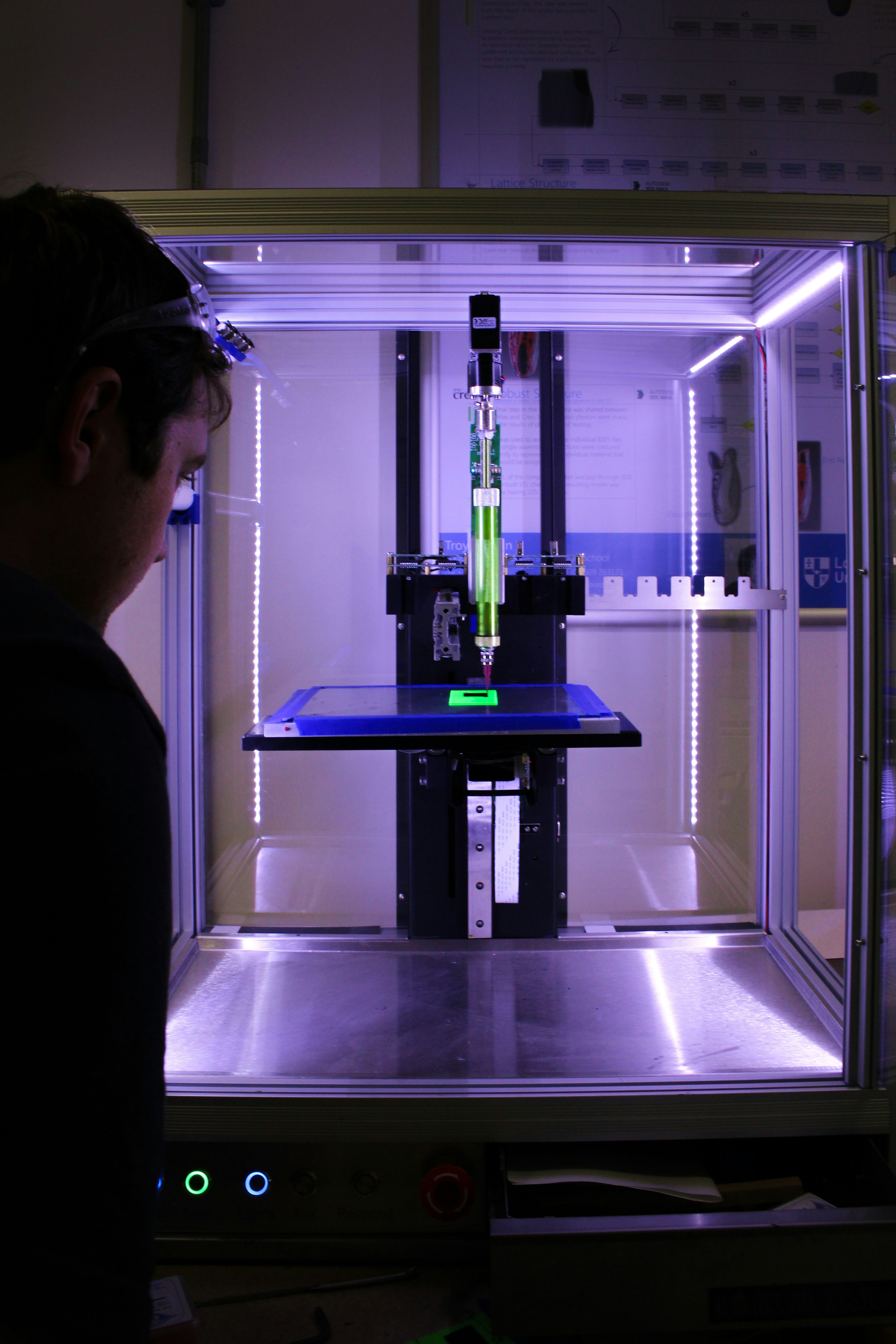
Rory Mir: Folks that are familiar with the New York budget process know a lot of things get wrapped up into the budget And as usual it gets delayed quite a bit. So we’re still pushing back on it right now. There’s a couple of provision impacting 3d printers which folks are familiar with 2d printers, but 3d printers for folks that aren’t familiar are kind of like hot glue guns that you tell a computer to control and that slowly builds up a shape in three dimensions. Often you see this being used by artists, making cool statues or cosplay costumes. It’s also really common in more commercial settings where people are making prototypes or researchers testing a new shape for things. So it’s really this cool technology that lets you fabricate things without going through big manufacturers and kind of iterate quickly and build up new creative ideas. So we’re fans of this open innovation that it brings to folks on the grassroots level.
And what this provision and the budget does is threatens that basically. It curtails a lot of that expressive freedom by mandating a software that we think is dangerous, a print blocking mandate that is yeah so out of fear of ghost guns and people making firearms and firearm components with these machines basically New York State in this proposed budget would have a database of forbidden files and mandate — without any details I need to emphasize — a way for all of these 3D printers to not be able to print shapes that could be used in that context, which I think there’s a lot of good intention coming into this.
People are concerned about gun violence and unlicensed firearms. However, when you speak to people who actually understand how these machines work and just the nature of making a 3D shape, it is not something that is possible. There are many ways that any algorithm trying to detect shapes can be undermined quite easily.
So we’re concerned that while the people that are being targeted, the people who are trying to make firearms and similar components with these machines will be able to follow a quick tutorial to get around those blocks, the many, many other creators, researchers, innovators, that use and rely on these machines are going to be stuck with this technology that the only real way to do it is to have it be surveilling users and there’s no safeguards in those in the provisions for that.
So we’re really worried about the impact that it’ll have on the lawful use of these machines and really just don’t want it to be rushed through this budget process without any safeguards or oversight for those regular lawful users.
BJ: So let me break that down a little bit. Because I think the concern from the ghost guns came from the murder of the United Health Care CEO and the claims that Luigi Mangione may have used a 3D printed gun.
But my understanding is it’s actually really difficult to make a functioning gun from a 3D printer. Is that right?
Rory: Yeah, it requires a level of understanding the craft of it. Technically, you don’t even need a 3D printer. Homemade DIY guns have existed long before 3D printers because it is ultimately a simple machine that once you know how to machine it, you can do it. So 3D printers... You can make a cheap error prone one that might blow up in your hand if you don’t already have that existing knowledge of how firearms work and how to properly put one together. So while it is possible for someone to make one with a 3D printer, there is a level of know-how that has to go into it as well.
BJ: Right, and I have to imagine, and this is all getting into hypothetical territory, but I have to imagine that if someone is particularly motivated to print a 3D weapon, that nothing is really going to stop them from doing it.
Rory: Yeah, I mean, that gets into this mandated software on these machines. One of the things is that it is easy enough to alter it because it’s unlike something tightly regulated and standard like currency. People will point to you’re not able to print a dollar bill, but that is a very specific reference with very specific design standards. So being able to detect whether it looks like that is quite simple.
With a firearm, you’re talking about a function. So any shape that can or can potentially serve that same function falls into that definition. And that gets even further complicated by the fact that with 3D printing, the machine only sees what you’re printing in the moment. So if you print something that has a lot of extra adornments, you can maybe shave it down to a core component. And likewise, if you... kind of print a bunch of pieces of a firearm and then later fuse them together, you can also make one that way.
So the machine isn’t gonna see your intention, right? It’s only gonna be able to look at the file and that’s what makes it so easy to game if you are determined to make these firearms.
BJ: Right, and so my concern here is the way that this software is described, sounds like, and just how you’ve explained it, it looks like it’s not specifically targeted at guns, it’s targeted at gun-like shapes, is that right?
Rory: Yeah, so we’re seeing a few of these in different states that have slightly different language. The New York one is really less detailed than ones we’ve seen in Washington and California. It’ll be decided by a working group without peer review, which is concerning to us. So it could be loaded with people with financial interests on how this works.
The thing that is shared across these bills is often the receiver of the firearm, which is the part that needs a serial number when you buy or alterations, which is even more abstract of simple shapes that can turn a handgun into a machine gun, you can make with literally a clothes hanger, or you can 3D print a shape that looks like that. And that is the same sort of abstract shape that is being implicated in these bills.
BJ: You were kind enough to send me a bunch of material, which I read through. And I found that I was kind of lost as to what exactly the software does, who exactly would enforce the penalties and then the penalties themselves seemed kind of outrageous. Could you explain those to us?
Rory: So in New York, a lot of it is really focused on the sellers. So a lot of the penalties will come to a seller who sells one of these machines that doesn’t have this mandated software on it. So that one of the things that really strikes me about that is that that extends to the second hand market that someone who has a printer today, if this passes in a few years might want to sell it to recoup some of those costs, or maybe get a new one. And then they would be implicated in these same penalties, which really range, but include potentially financial penalties or liability for anything that is done with the machine that is sold.
BJ: I was kind of shocked at this suggestion that people would have to buy, [the 3D printers face to face.]
So if you lived in our region and you wanted a 3D printer because you saw what was being done at SUNY New Paltz, or you are interested in resistance work where you want to print out whistles for detecting ice, that you would have to go and meet someone in person to purchase a 3D printer. Is that right?
Rory: Yeah. It’s absurd. I feel that not only for the purchase, but for the delivery of the device. And there’s no exception to commercial folks. So this bill includes 3D printers as well as something called CNC machines, which are similar to 3D printers, but kind of do the opposite. They carve a shape out of metal or wood instead of adding plastic together. And those are very expensive. For machines that are typically used by huge industries, aerospace, automotive, medical, manufacturing, these huge commercial industries would also have this silly face-to-face requirement. But then the other thing I think of … I lived all over New York state in my life, including quite a bit of time in the Finger Lake region. And frankly, you having to drive to one of the few stores that has this, which, you know, I don’t know that I can only name a handful off the top of my head that even sell 3D printers.
You have to drive there to buy it instead of ordering it online. And that has all the inherent limitations of having to be buying in person of whatever’s in stock. Whatever brands has a deal with that reatalor So there’s a lot of practical headaches for the people who want to get into and would benefit most, I think, from these printers, people who want to repair things without having to take it to the nearest shop or have things sent over from the other side of the world.
BJ: Yeah, I mean, you mentioned the finger legs. I was just thinking of like a student at Alfred State having to drive a few hours to go and meet some random person to buy a 3D printer. It sounds like you’re buying drugs. That’s the thing that struck me was, you know, I feel like the marijuana dispensaries right now, I could just walk into one as long as I show my driver’s license. And I don’t like I don’t have this weird requirement that I can only buy it in person, face to face.
So, who benefits from all this? This really seems to me like it’s more the tech companies are pushing this than people who are actually concerned about gun violence.
Rory: Yeah, I think it’s pretty clear that the winners from this aren’t the gun safety advocates, but are the major makers of these printers and retailers that sell these printers that it would become far more difficult and burdensome for someone to break into the market once you have this sort of regime set up where you have to not only build this technology upfront in order to, again, this like magic bean technology of being able to prevent a firearm from being printed, but then the ongoing costs of keeping that updated, meeting the requirements and it creates this huge headache that would only really benefit from a handful of the biggest makers of these devices.
BJ: And did you see that in the … I saw the California legislation that had been proposed and the Colorado legislation that had been proposed. Do you find that it’s the same group of people that sort of pushing this?
Rory: I think there’s a lot of similarities on the gun safety side of it, which again, I think is well intentioned and I value gun safety there. But then I think a lot of the discussion on the industry side of it, of, it has been pretty secretive. We’ve met with one or two major manufacturers between these 3D printers, but they never seem to mention who they’re meeting with. So, you know, one can draw their own conclusions from that. But I think it is remarkable that the big printers have been so quiet on this, something that would impact their customers so negatively. [Emphasis added.]
BJ: Right. You had a great term. I know what it means because we’ve interviewed Cory Doctorow So we’ve talked about enshitification quite a bit. But you used, I saw the term used by the EFF of an “enshitification lock,” which is essentially what this legislation is trying to do. And I was hoping you could explain that to people who might not be familiar.
Rory: So I’ll actually back it up a little bit to talk about digital rights management software, which folks might not be familiar with. And there’s a pretty good analogy for this print blocking technology where … Basically, it is now a federal crime and has been since the DMCA passed to alter any code that exists to prevent copyright infringement. And this is what makes it difficult to move an e-book from one device to another. And people are, famously people know about it, restricting people’s ability to repair tractors like John Deere tractors.
And a lot of that comes from having this code that has this special permission that makes it difficult for users to navigate around. So DRM gives manufacturers the special leverage over customers so that we can see it manifest in 2D printers with HP. Making it difficult to get ink for your printer. There is a DRM protection that you can only use the appropriate ink and that makes it more expensive to use the ink. And a lot of that is because of this special code that you’re not able to circumnavigate and just get the cheap ink that would be otherwise available.
So by building this in and making it a mandate and tying it to the legal system, you’re creating not only a huge incentive but a legal protection for these anti-competitive practices on the part of the tech company making it.
BJ: Yeah, and I think it’s I find it troubling that we’re not talking about doing away with that DRM in the budget, but we are talking about adding like additional DRM to these.
Rory: Exactly. And yeah, again, with this one, it really creates this incentive of surveillance, right, because they are asking for this big abstract type of blocking that you can’t really do with the type of firmware that’s on these machines.
And it would be difficult to do with the slicing software, which is the software you use to use the printer on your own laptop. So it’s really encouraging it all going to an AI analysis in a cloud somewhere, which means everything someone prints being sent and observable to these folks. Privacy violation. Chills speech.
And it has a lot of practical considerations, particularly with commercial buyers with intellectual property theft. Those other extra risks that are being introduced by this.
BJ: Was the Colorado law thrown out over free speech. Was that a successful lawsuit?
Rory: So the Colorado law, right as it was reaching the finish line, removed a few provisions that were making it criminal to share the files for these gun components. And it was removed at the last minute by the governor due to First Amendment concerns. And I haven’t given as much attention to it, but that is also one of the provisions in this New York budget of making it a crime to, in certain circumstances, to share or to possess these files. So we have similar First Amendment concerns about what’s in the New York provision. That as nice as it’s, again, it comes from this sort of well-intentioned place, what if we can just mandate that things were nice, without the real practical considerations that criminalizing information doesn’t work.
Someone who’s intent on getting these files or sharing these files are gonna find ways to do so, which we see with things like copyright infringement and piracy, that it’s not really a barrier, it’s just an extra charge to throw at someone when they’re already doing something that’s illegal. And that’s something I haven’t emphasized yet, but it is already illegal in New York to produce or sell one of these 3D printed firearms. So we’re just adding additional laws that hurt consumers for something that’s already illegal. [Emphasis added.]
BJ: You beat me to it. was gonna say, isn’t it already illegal to like, make and possess these weapons?
Rory: Yeah, as of I believe 2022, yeah, to, I believe it was passed in 2019. But yeah, to produce these firearms, these unlicensed firearms is already a major crime to produce or sell.
BJ: It reminds me a lot of like the digital ID, digital driver’s license push, where I understand where some of it comes from, where you, okay, you don’t want kids to access horrible content. I completely get that. But in the process of, you know, quote unquote, protecting the children, you’re actually creating this huge digital database of everyone’s driver’s license and everyone’s face and all of the data that comes with it.
And do you really want to be doing that right now when you have an authoritarian regime running the federal government? And so this to me, seems like sort of the same deal, right? There is a good idea. I’m adamantly against gun violence. The problem with guns is guns. I would get rid of all of them if I could. But to me, it seems like we’re not really solving the problem here. We’re just using the problem as an excuse to enrich certain companies and at the same time create yet another database, right, of stuff that you don’t necessarily, you might not, you might be listening to this thinking I have nothing to hide, but you might be, you live in a very fluid situation.
For example, if you were to move to a red state and abortion is illegal, right, then if you print out material about abortion, you are committing a crime according to that state. So even if you, quote, have nothing to hide at the moment, laws like this have a tendency of coming back and biting you in the ass later.
Rory: Yeah, yeah, it’s ultimately about defending grassroots innovation and user rights. And yeah, today it is something that feels very sympathetic and can only grow from there once this infrastructure is in place, right? Right now it’s about the safety of building something that is more inherently dangerous, but one could make a similar argument about the safety of printing your own repair parts, that do you really want people repairing their bicycles with a 3D printed component if, you know, maybe it would break and not be printed correctly? And then I think the natural next step is, of course, copyright. I’m sure many companies would like a way to prevent people from printing their own cheap alternatives to either commercial sold repair parts or even if you think about toys and things that a lot of people make 3D printers with, know, your toy Pokemon figurines might be blocked just because Nintendo doesn’t want people buying or building their own instead of buying from them. So I think there’s a core kind of creativity we’re defending here, even if it starts with something that is harder to defend, right.
BJ: It’s one of those things where it’s, again, it’s all presented under, all of this stuff is always presented under the best of intentions. But once you start to look underneath, you start to realize, oh, OK, this is a little bit more than what you’re saying it is. Let me ask you in the time that we have left, what, well, I guess it’s a two-parter, which is what can or what is the EFF considering on this front? And what can people do that are listening to us, what can they do to get this out of the budget?
Rory: Yeah, I think right now it’s such an important time to reach out to representatives since we’re in this prolonged budget. Going to Eff.org/3dprintNY is our action page that lets you easily message your assembly member and state senator with a customizable message so you can include your own thoughts and we’d encourage you to.
And I think really it’s we’re in a state of it’ll pass any day now so taking that action now is really urgent. I think beyond that it’s not going to be the last 3D printing legislation we see other bills introduced that would require a criminal background check in order to buy a 3D printer.
You know, and again, this is a fringe use of 3D printers. Right. And it’s also a fringe way to make a ghost gun, like overwhelming ghost guns are made from DIY kits that are mass manufactured. [Emphasis added.]
BJ: Right, it’s not common at all. I think that’s something we should stress is that like the…
Rory: So it’s a fringe from both angles. This is, we’re talking about a very small subset of people and to subject everyone to already face-to-face sales, but potentially as well, these background checks is pretty ridiculous and will just disempower local communities and local makers.
So I think keeping an eye out for these other bills as they come up. But right now, we’re in a big mobilization push for this budget. Since, again, we’re on borrowed time.
BJ: Rory, thank you so much. Where can we find you? I mean, you mentioned the Action page. How else can we get involved and support the EFF?
Rory: Yeah, so if folks want to support EFF’s work, they can go to EFF.org/join and become a supporting member. If you want to follow me, I’m on a little site called Mastodon, false mirror at Masto.nyc. But yeah, I think following our work on the main site at EFF.org is probably the best way to keep in the loop.